

Choosing a rug based on location is a technical process that requires different material, texture, and size decisions depending on the room's usage intensity, floor dimensions, and furniture arrangement. A thin-textured rug chosen for the living room would wear out in a few months in the kitchen, while a thick-pile rug bought for the children's room becomes a cleaning nightmare.
This guide covers how to choose the right rug for each room's specific conditions, concrete measurement rules, and material criteria.
Things to Know Before Choosing a Rug, Regardless of the Room
Before making location-specific selections, there are three fundamental criteria that apply to every room. If these criteria are ignored, a wrong decision becomes inevitable, no matter which collection is considered.
- Traffic Intensity: How many people use the room, and how often, per day? Living rooms and hallways experience high traffic, while bedrooms have low traffic. In high-traffic areas, keep the pile height limited to 8–12 mm.
- Risk of Moisture and Dirt: Kitchens, bathrooms, and entry hallways are prone to moisture and dirt. In these areas, rugs with polypropylene or polyester surfaces and non-slip backing are essential. Wool and viscose will quickly deteriorate in these environments.
- Size and Furniture Relationship: If the rug size is not considered in conjunction with the furniture placement, it will either be too small, creating an "island" effect, or too large, narrowing passageways. Measure the floor projection of your furniture before determining the rug size.
How to Choose a Living Room Rug
In choosing a living room rug, two main decisions are determinant: the rug's position relative to the furniture and its corresponding size. When these two decisions are made correctly, color and pattern preferences become secondary.
Size Guide: Under the Sofa, or Outside?
The size of a living room rug is determined by two different layout plans based on its relationship with the sofa.
Sofa legs on the rug: Creates a large, encompassing look that unites all the furniture. For a 3+3+1 sofa set, typically 240×330 cm or 200×300 cm is needed.
Only front legs on the rug: The sense of spaciousness is maintained with a smaller rug. For the same sofa set, 160×230 cm might be sufficient. Considering that the average surface area of living rooms in Turkey is 18–22 m², this second placement is the more commonly preferred approach.
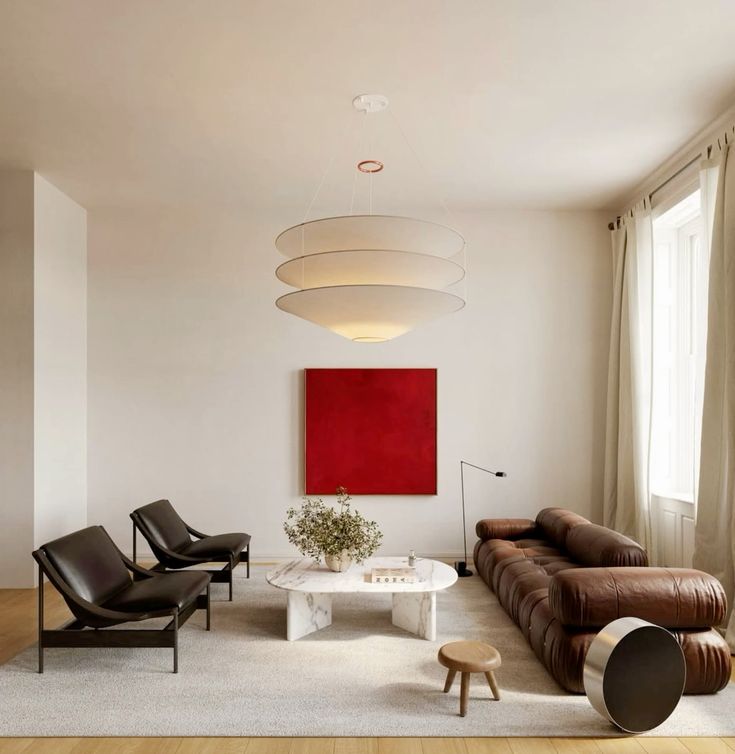
No legs on the rug: A small rug centered around a coffee table provides a modern and minimalist look. This approach is used in large living rooms over 80 m² to define the seating area.
💡 Practical Method: Before buying a rug, cut out newspaper or cardboard pieces to simulate the desired size on the floor. Place furniture on top and live with it for 1–2 days; the decision will be much clearer.
Living Room Rug Material Selection
The living room's purpose determines the material preference. For a living room that hosts many guests, high-wear-resistant acrylic or polypropylene is preferred. For a less frequently used, elegant sitting room, viscose surfaces offer a different visual depth with their silky sheen.
|
Material |
Appearance |
Durability |
Maintenance |
Ideal Use |
|---|---|---|---|---|
|
Polypropylene |
Matte, vibrant colors |
⭐⭐⭐⭐⭐ |
Easy |
High-traffic living room |
|
Acrylic |
Wool-like, plush |
⭐⭐⭐⭐ |
Medium |
Standard living room |
|
Viscose |
Shiny, luxurious feel |
⭐⭐⭐ |
Delicate |
Seldom-used sitting room |
|
Wool |
Natural, warm |
⭐⭐⭐⭐ |
Dry cleaning |
Classic, long-lasting choice |
Color and Pattern Harmony
The color choice for a living room rug should be coordinated with the sofa and curtain colors. Three practical rules:
If the sofa is patterned, choose a solid-colored rug. Two clashing patterns are tiring to the eye.
Light-colored floor, dark-colored furniture combination makes the room appear larger.
A cream or beige toned living room rug offers the most flexibility for renovation; you won't need to change the rug when changing furniture.
|
Sofa Color |
Recommended Rug Tone |
To Avoid |
|---|---|---|
|
Gray |
Cream, light blue, anthracite |
Dark brown |
|
Beige / Cream |
Earth tones, pastel green, terracotta |
Yellow-green |
|
Navy Blue |
Cream, light gray, white |
Blue tones |
|
Dark Brown |
Cream, pastel, light gray |
Dark tones |
|
White / Light Gray |
Any tone fits; pattern can be chosen freely |
— |
Recommended Collections
Considerations for Choosing a Kitchen Rug
A kitchen rug is exposed to oil, water, and heavy foot traffic, making it a choice with completely different priorities than a living room rug. Aesthetics are secondary; practicality is primary.
Easy-to-Clean Material Selection
The best performing rug materials in the kitchen are polypropylene and machine-woven synthetic rugs. These materials are resistant to water and oil-based stains, and they can be wiped clean. Hand-knotted or wool rugs will quickly wear out in the kitchen, and stains will become permanent.
At Apex HALI, we've observed that the most common complaint about kitchen rugs is thin rugs that look good but cannot withstand wet floors. For the kitchen, we always recommend a minimum base thickness of 5 mm and a polypropylene top surface.