

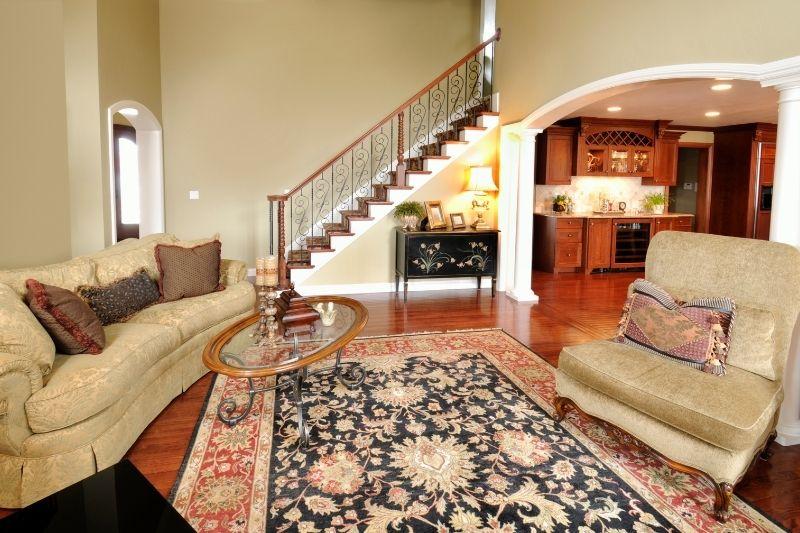
Persian carpets have been a symbol of luxury and comfort for centuries. Their intricate patterns and vibrant colors make them the focal point of any room they adorn. Preferred for decorating many living spaces, from homes to offices, Persian carpets bring warmth and beauty to every area. This is because they are made from a combination of natural fibers such as hand-spun wool, silk, and cotton, which makes them durable enough to last for generations. The unique patterns in Persian carpets are often inspired by nature or traditional motifs representing different aspects of life. Persian carpets are among the rare pieces that never go out of style with their timeless beauty. The Persian carpet type is highly sought after for its beauty and durability, making it an excellent choice for any space. Whether you want to add elegance or something cozy, these carpets are sure to bring warmth and comfort to your home.
History of Persian Carpets
Persian carpets are a beautiful art form that has existed for centuries. The oldest known carpet of the Persians, considered the first carpet weavers of the ancient world, is called "Pazyryk." Discovered in the frozen tomb of a Scythian ruler in Siberia, this carpet dates back to 500 BC. Today, this carpet, exhibited at the Hermitage Museum in St. Petersburg, is considered the oldest carpet in the world. The first document regarding Persian carpets dates back to the Sassanid period between 224-641 AD. Chinese texts mention Persian carpets. However, Greek historical writings also speak of the existence, quality, and value of these carpets.
The recognition of Persian carpets worldwide was achieved by Shah Abbas the Great. Although carpets were sent from the Ottoman Empire to Europe before this period, there was a significant increase in interest in the region and, consequently, in carpets with Shah Abbas's reform movements. Iran, becoming a pioneer in carpet weaving, began to deliver its woven carpets all over the world as trade further developed. So much so that the patterns of Persian carpets appeared in the paintings of famous artists, the books of writers, the decorations of fashion magazines, and the clothes of artists. From royal palaces to family homes around the world, to museums, Persian carpets continue to be admired for their beauty and craftsmanship even today.
Characteristics of Persian Carpets
Persian carpets are famous for their intricate designs, beautiful colors, and luxurious textures. For centuries, they have been used to decorate homes and add elegance to any room. They are designed in various shapes, sizes, patterns, and colors, making them perfect for every home. Each carpet is hand-woven with great attention to detail to ensure the highest quality. In Persian carpets, which bring beauty to every area, it is possible to see many details, from traditional designs to modern motifs. The characteristics and quality of Persian carpets, which are quite complex to weave, vary according to the region where they are woven. There is a unique design passed down from generation to generation, which makes each one special. Especially antique Persian carpets have a unique fingerprint. The knotting
method, knot density per cm, materials used, and design form the fingerprint. The different patterns and styles of old Persian carpets are striking. This sets them apart from other carpets in the Persian carpet price range. The price of antique Persian carpets is slightly higher than that of other hand-woven carpets. That's why Persian carpets are seen as an investment by some people.
Persian Carpet Colors and Patterns
Persian carpets are known for their intricate patterns and vibrant colors. These carpets are often characterized by bright colors and complex designs that reflect both the culture and history of Iran. Persian carpets feature a variety of colors ranging from pale blue, dark red, to green, as well as various geometric patterns such as diamonds, medallions, stars, and floral designs. It is also possible to see graphic and abstract patterns in carpet motifs. Each color in Persian culture has its own symbolism. For example, blue symbolizes water, and red symbolizes fire. The beauty of these carpets lies in their ability to combine different elements of Iranian culture into a stunning work of art.
How are Persian Carpets Produced?
Producing a Persian carpet, known for its intricate designs, colors, and craftsmanship, is an intensive process that requires skill, patience, and dedication. It involves several steps, such as spinning the yarn, dyeing it with natural dyes, weaving it on a loom in the desired pattern, and finishing it with a complex knotting technique. Due to the extensive effort required, Persian carpets can take several months or even years to complete. This process depends on the quality and size of the carpet.
Carpet weaving begins with the warp. The starting base is formed with warps made of cotton, wool, or silk threads along the length of the carpet. The wefts of this thread are added below and above the warps. The warps on both sides of the carpet are joined at different thicknesses, forming the edge. Loose knots are tied around successive sets of warps on top of the base created by passing a double weft underneath. This is how the carpet's pattern begins to form. After the knots form a pile, each row of knots is secured, tightened by adding more wefts. The wefts are beaten with a comb beater to further tighten the newly woven row and secure the patterns. The number of knots per cm varies depending on the weaver's expertise. When the carpet is completed, the ends of the warps are turned into fringes, braided, or otherwise. The result of all this effort is a beautiful work of art that can last for generations.
How to Identify an Original Persian Carpet?
Persian carpets are known for their excellent craftsmanship and intricate designs. However, with so many imitations on the market, it can be difficult to tell the difference between a real Persian carpet and a fake one. Fortunately, there are several ways to identify an original Persian carpet. Knowing how to detect certain features, such as the quality of the fabric and the pattern of the weave, can help distinguish between a genuine and a fake Persian carpet. Here are some features to look for to tell a genuine Persian carpet
from a fake one:
- Every Persian carpet is unique. Even if the same person weaves it, they cannot make it 100% identical. Therefore, one should check whether the carpet is available in different sizes and quantities.
- The fringes of Persian carpets are not sewn on. The ends of the warp threads form the tassels and are part of the carpet. If the fringes are sewn on, it indicates that the carpet is not original.
- Machine-made carpets have correct symmetry. Hand-woven original Persian carpets do not have symmetry. An irregular and imperfect carpet is original.
- Persian carpets are made from cotton, silk, and wool. In non-original carpets, synthetic fibers are used to reduce cost. The back surface of the carpet, in particular, should be checked to see if synthetic material has been used.
- A high-quality Persian carpet has a high knot count. Persian carpets with a low knot count may not be original.
- Genuine Persian carpets use special plant dyes. These dyes, made from various plant and animal materials, do not fade. To test the carpet, a damp cloth can be placed on one corner of the carpet and left for a few hours. If there is any color bleeding or mixing on the cloth, that carpet is not original. Also, the carpet being colorfast indicates that vegetable dyes have been used.
With this information, you can be sure that you are investing in a unique work of art that will last for generations. By browsing the Persian carpets in Apex's collection, you can have a variety of stylish options that you can use for a long time.
Persian Carpet Cleaning
Persian carpets are a delicate product that requires special care when it comes to carpet cleaning. Persian carpets are usually made of wool or silk and require a special cleaning method to maintain their beauty. Traditional methods such as hand washing and dry cleaning can be used for cleaning Persian carpets, but they must be done carefully to avoid damage. For more thorough cleaning, special cleaners can be used. Knowing the right techniques is crucial to preserving the beauty of a Persian carpet. If the carpet cannot be regularly sent to a professional cleaning company, the following steps can be followed for cleaning:
- Vacuuming should not be done too often as it will damage the carpet fibers. To prevent the fibers from loosening or being damaged, it should be vacuumed every two weeks with a vacuum cleaner, in the direction of the fibers, without moving back and forth.
- One of the most effective ways to get rid of dust can be to shake the carpet instead of vacuuming it. Therefore, with help, the carpet can be shaken at regular intervals. During shaking, beating should not be done. This can also damage the fibers.
- If the dust-free carpet is to be washed, cold water, carpet shampoo, or liquid soap should be used at this stage. Cold and clean water is applied to both sides of the carpet. This process can be done with a garden hose. After applying water, soaping is done and rinsing begins with a long-haired brush. This process should also be done in the direction of the fibers. The carpet is rinsed with a water spray method and left to dry.
- Leaving the carpet to dry and ensuring it is thoroughly dry prevents mildew. Therefore, on a sunny day, the carpet should be turned front and back and aired out. However, it should not be exposed to direct sunlight.
- Stains spilled on the carpet can be removed immediately with a damp or soapy cloth. However, for stubborn stains, professional help should be sought without delay.
- Cleaning too frequently will damage the carpet, so it should only be cleaned when stained or looking dirty.
- Steam cleaning is not recommended for Persian carpets as it causes the carpet to loosen.

Leave a comment
This site is protected by hCaptcha and the hCaptcha Privacy Policy and Terms of Service apply.