


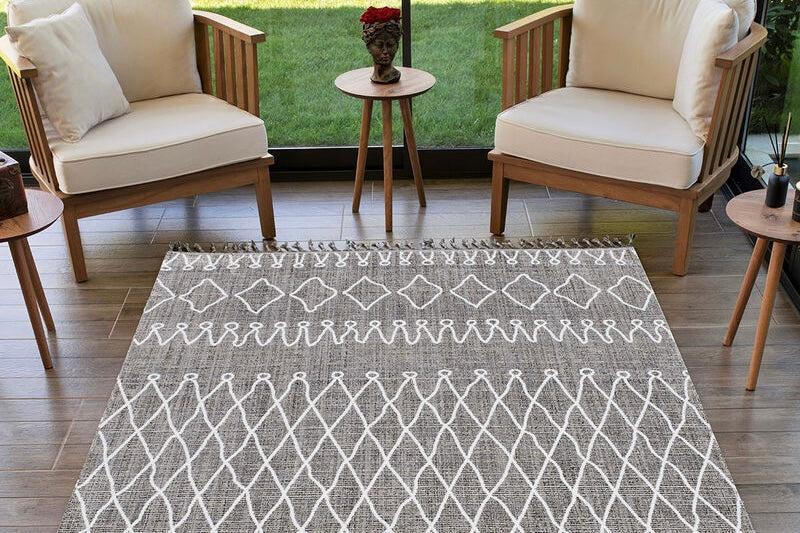
An ethnic rug is a type of carpet that carries the unique motifs and colors of cultures from different geographies, woven with characteristic patterns. Ethnic rugs bear traces of the culture of the region they belong to. Especially in classic home decor, it is a highly sought-after item due to its traditional textures. The reason for this is that ethnic rugs reflect local carpet and rug motifs belonging to different cultures. Cultural motifs of Asian countries like Afghanistan and India, and African countries like Morocco, are incorporated into ethnic rugs.
Types of Ethnic Patterned Carpets and Rugs
Ethnic rug varieties appeal to users both with their different patterns, color options, and suitability for modern and classic uses. These rugs, which evoke tradition and carry cultural traces, stand out with their attractive ethnic designs for home decoration. There are various types of ethnic rugs such as ethnic Tabriz rugs bearing traces of Persian culture, Samarkand rugs bearing traces of Central Asian culture, Turkish carpets and kilims reflecting Anatolian motifs, and Karabakh kilims from the Azerbaijan region. Ethnic rug varieties are found in every culture, including the oldest civilizations and nomadic communities. The Pazyryk carpet, an artifact from the Huns in Central Asia, is an indicator of this. Historically, rug weaving involved weaving threads on a loom, and local motifs were hand-embroidered onto these looms and colored with natural dyes. Ethnic rugs are produced using similar weaving methods in all different geographies. However, each culture has its own motifs and color usage. Therefore, an ethnic rug can be considered a cultural and artistic artifact belonging to the civilization it represents.
Ethnic Rug Patterns
Ethnic rugs carry traces of cultures from different geographies. You can see Anatolian motifs in Turkish carpets and kilims, reflecting the handicrafts of that period. There are some frequently used patterns and colors in ethnic rug varieties embroidered with Anatolian motifs. Child motif, deer motif, eagle and bird motif, dragon motif, and tree of life motif are among the most commonly used patterns in Anatolian ethnic rugs throughout history. Especially the double-headed eagle motif, representing the Anatolian Seljuk State, is frequently found in ethnic carpets and kilims unique to this region. In Karabakh ethnic rugs, floral and botanical motifs are more prominent. In Karabakh ethnic rugs, which bear traces of Azerbaijani geography, botanical motifs are transformed into vibrant patterns with eye-catching colors. Iranian Tabriz ethnic rugs, on the other hand, feature decorative designs with medallion motifs and widespread use of red and blue colors. Iranian ethnic rugs are produced not only in Tabriz but also in regions like Kashan and Heriz. These ethnic rugs have central medallion motifs, garden patterns, and alternative designs with geometric lines. Ethnic rugs also feature varieties reflecting cultural motifs from African countries. African ethnic rugs, embellished with different motifs such as elephants, masks, and Moroccan patterns, also attract users' attention.
Where are Ethnic Rugs Used?
Ethnic rugs, with their many patterns and color varieties, can be used in eye-catching places like museums, as well as in daily life in areas such as homes and offices. Ethnic rugs can be preferred for both modern and classic home decorations. Especially the living room, kitchen, and entrance areas of the house are suitable for ethnic rug varieties with elegant designs, vibrant colors, and stylish textures. You can choose from ethnic rug varieties that contrast with the colors of kitchen cabinets, match the classic sofa set in the living room, or harmonize with mirror decorations in the entrance, depending on your preference and personal taste. Ethnic rugs are products with a wide range of uses due to their variety of motifs and color options. Ethnic rugs produced for multi-purpose use have non-slip backing varieties, thus offering the user a comfortable use. In a modern home decoration, ethnic rug varieties with geometric motifs can be preferred. If an ethnic rug is to be used in the living room, you can explore ethnic rug models with floral motifs and warm colors for furniture like display cabinets, consoles, and heavy classic antique sofa set decorations.
Deciding where an ethnic rug can be used depends on its characteristics. Ethnic rugs are produced by hand or machine weaving. Hand-woven ethnic rugs are made from natural fibers such as wool, cotton, and bamboo, while machine-woven ethnic rugs are made from synthetic fibers. Hand-woven ethnic rugs made from natural fibers require delicate care and professional cleaning. Therefore, living rooms are more suitable for the use of these ethnic rugs than areas like entrances and kitchens. Especially in homes reflecting minimalist and bohemian styles or unique office designs, these varieties might be a better choice. Machine-produced ethnic rugs made from synthetic fibers are more durable and can be used for a long time. These products can be preferred in areas that get dirty more often, such as entrances and kitchens. Machine-produced ethnic rugs that are washable are more suitable for daily cleaning. With their traditional local motifs, timeless designs, and compatibility with classic and modern decor, you can comfortably use ethnic rugs to create a simple, authentic, and warm atmosphere in your living space.
What to Consider When Choosing an Ethnic Rug?
The choice of ethnic rug is made according to the rug's practical features (non-slip, washable, etc.) and design details. In choosing an ethnic rug that complements the decor, the colors, patterns, motifs, etc., used in the model are important design details. Therefore, the primary consideration for choosing an ethnic rug with the desired design is where the rug will be used. The design and model of an ethnic rug to be used in the kitchen, living room, or parlor will vary depending on its place of use. For the kitchen, simpler, contrasting designs that match the cabinet color can be preferred. For the living room, heavier, medallion-patterned models with colors that harmonize with the sofa set can be chosen. This depends on which traditional, rare pieces you want to select for your home decoration.
Another important consideration when choosing an ethnic rug is its usability. The choice of ethnic rug is important for comfort in the area of use, sound absorption, and temperature. For a floor insulation with a high temperature, ethnic rugs with a dense filling layer should be preferred. For cold floorings, instead of ethnic kilims, thick-filled ethnic rugs with adequate layering properties can be chosen. Additionally, choosing ethnic rugs with non-slip properties can be a good choice for comfort of use. The durability and quality of the materials used in the ethnic rug are another criterion to consider for its lifespan. Ethnic rugs not made from quality materials may experience wear and tear in their underlying padding over time.
Generally, when buying an ethnic rug, it is important to consider where and for what purpose it will be used. It is important to decide on the ethnic rug model by considering your needs. Determining where the ethnic rug will be used helps you decide on the size and aesthetic model of the rug. If the ethnic rug will be used in a child's room or kitchen, being a washable rug makes its use easier.
Ethnic rug models are produced in different designs according to their purpose and place of use. You can easily choose the rug with the features you want among ethnic rug varieties. You can decide on the product you want by looking at Apex rug varieties in designs and square meters suitable for hallways, living rooms, and kitchens among different options such as Iranian ethnic rug models and Karabakh ethnic rug models.

Leave a comment
This site is protected by hCaptcha and the hCaptcha Privacy Policy and Terms of Service apply.